Harris County DWI: How reliable is the HGN test in Texas DWI cases, and what makes it look bad on video?
The horizontal gaze nystagmus test is only as reliable as the officer’s training, the medical screening, and the exact way it is performed and recorded, so in practice its value in Texas DWI cases ranges from helpful to weak depending on those details. When officers in Houston or elsewhere in Texas do not follow standardized steps or when the video shows lighting, angle, or timing problems, courts may give the HGN far less weight, which matters if you are deciding how to approach your case. If you are asking how reliable is the HGN test in Texas DWI cases, the short answer is that it can be persuasive only when the administration and documentation are by the book.
Why this matters if you are a Practical Worried Driver
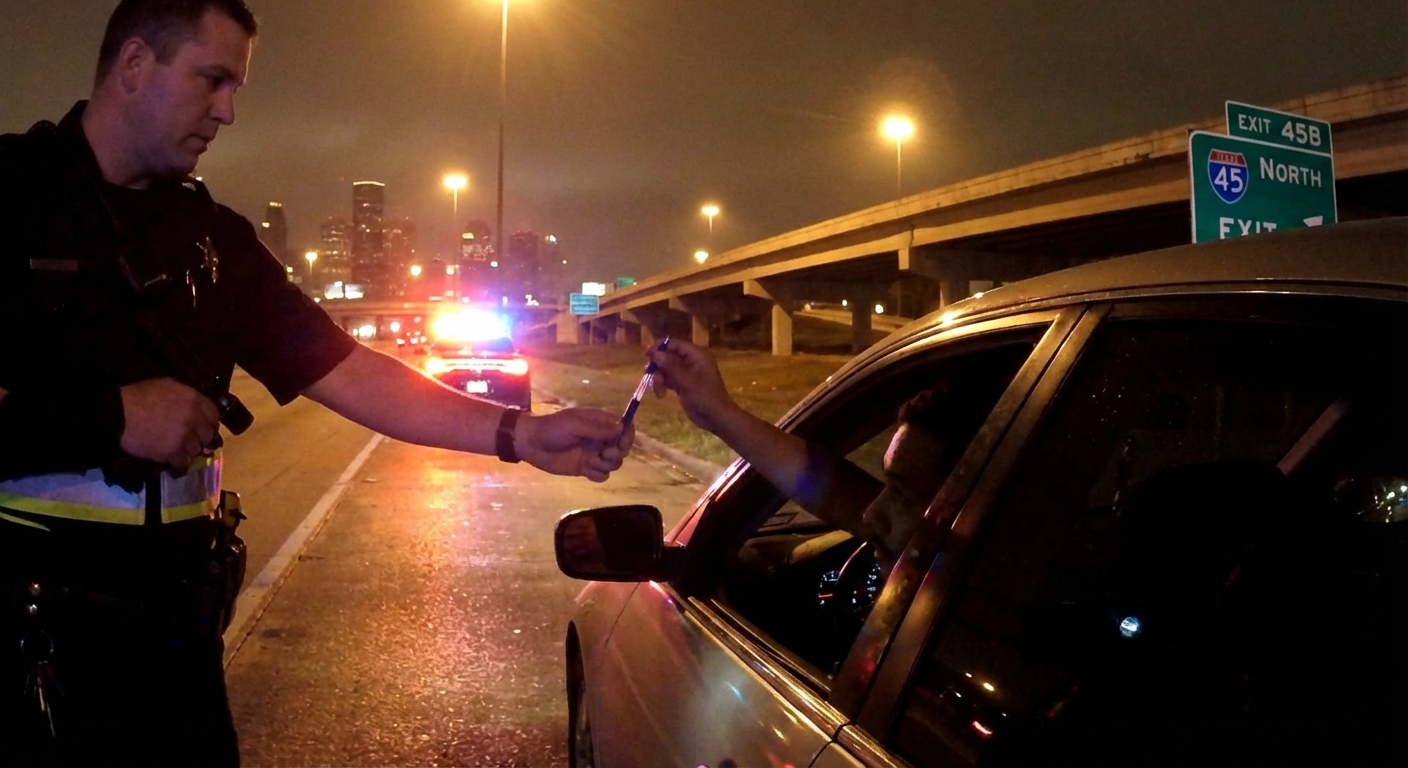
You are juggling work, family, and a recent arrest. A Houston patrol car’s dash cam captured you on the roadside while an officer moved a pen in front of your eyes. You heard terms like “six clues” and “lack of smooth pursuit.” You worry that a courtroom video will look bad even if the test was not done right. This guide explains how standardized field sobriety tests in Texas are supposed to run, what the officer must check before starting, and exactly which mistakes tend to show up on video and undermine reliability.
What is HGN and how standardized field sobriety tests in Texas are supposed to be run
Horizontal gaze nystagmus, or HGN, is an involuntary jerking of the eye that can become more pronounced when a person has alcohol in the system. It is one part of the three standardized field sobriety tests in Texas, along with the Walk and Turn and the One Leg Stand. Because HGN is a physiologic response, the test must be done in a very specific way to avoid false positives and to make the observations meaningful in court.
Pre-test medical screening the officer should document
- Ask about head injuries, neurological issues, vertigo, contact lenses, and vision problems.
- Check for equal pupil size, equal tracking, and resting nystagmus. If these are abnormal, HGN results may be unreliable.
- Confirm the person is not facing flashing strobe lights or moving traffic that could trigger optokinetic nystagmus.
How the officer should position the stimulus
- Use a visible stimulus such as a pen tip or small light held slightly above eye level, 12 to 15 inches from the face.
- Keep the stimulus at the same plane as the eyes, do not angle up and down during passes.
- Stand so the officer and driver are both stable, with feet planted and minimal wind or noise distractions.
Horizontal gaze nystagmus test clues Texas officers are trained to look for
There are six standard clues, three in each eye:
- Lack of smooth pursuit. The eye should track smoothly like a marble rolling on glass. Jerking suggests a clue.
- Distinct and sustained nystagmus at maximum deviation. When the eye is held as far to the side as possible for at least four seconds, a pronounced jerk that continues is a clue.
- Onset of nystagmus prior to 45 degrees. If the jerking starts before the eye reaches about a 45 degree angle from center, that is a clue.
Standardization requires two passes for each eye for each clue, proper timing, and clear articulation on the video or in the report. If any of those steps are missing, the reliability drops.
Field sobriety test mistakes that commonly show up on Houston videos
When someone asks how reliable is the HGN test in Texas DWI cases, what they really want to know is whether the specific video in their case will hold up. Here are frequent problems seen on dash cam and body cam recordings in Harris County:
- Camera angle hides the eyes. The dash cam sits too far to the side or behind the patrol unit. The body cam points at the chest or hands. If a judge cannot see your eyes and the stimulus at the same time, the visual confirmation of clues is weak.
- Harsh spotlight or flashing emergency lights. Strong light aimed directly at your eyes or flashing lights behind you can trigger or exaggerate eye movement unrelated to alcohol.
- Stimulus too close or too far. Holding the pen six inches from the face or two feet away alters the angle and the ability to judge 45 degrees, creating misleading “onset” calls.
- Wrong speed and timing. Smooth pursuit should take roughly two seconds out and two seconds back per pass. The maximum deviation hold should last at least four seconds each time. Quick sweeps or short holds make the so-called “distinct and sustained” finding questionable.
- Leading instructions or head movement. If the officer does not remind you to keep your head still and to follow the tip only with your eyes, head turns can mimic lack of smooth pursuit.
- Poor medical screening. Skipping the equal pupil and equal tracking checks means pre-existing eye or neurological issues might be mislabeled as alcohol clues.
- Wind, traffic, or unstable footing. If you are shivering on a windy shoulder of the freeway or balancing on gravel, overall stress can affect attention and eye steadiness.
- Background movement in the frame. Passing headlights, moving officers, or rotating beacons in the direct line of sight can elicit optokinetic nystagmus that looks similar to alcohol nystagmus.
If your Houston DWI field sobriety video shows any of the problems above, an attorney can argue that the HGN was not run under standardized conditions. That does not throw out the entire case by itself, but it often reduces the weight a fact finder gives to that piece of evidence.
A quick picture from real life
Consider this anonymized micro-story. A Pasadena shift supervisor was stopped on I‑610 after a lane change. He was polite and steady, but the officer did HGN under the patrol car spotlight with a tow truck’s blinking lights behind him. The body cam pointed at the subject’s chest, not his eyes. The officer swept the pen across in one quick motion and held at the far edge for maybe a second. On paper the report claimed “six of six clues.” On video, the court could not see the eyes, the four second holds were missing, and the 45 degree onset was a guess. The HGN ended up carrying little weight in negotiations because the visual proof did not match the standardized method.
How standardized SFSTs connect to license consequences in Texas
HGN is evidence in a criminal case. Your driver’s license runs through a separate civil process called Administrative License Revocation. After an arrest, you usually have 15 days to request an ALR hearing, and if no hearing is requested the suspension typically begins on the 40th day after you received notice. Failing a breath or blood test often brings a 90 day proposed suspension for a first event, and refusing a test often triggers a 180 day proposed suspension for a first event. For the official steps, timelines, and exceptions, see the Texas DPS overview of the ALR license-suspension process. The ALR hearing can be an early chance to question the officer about exactly how HGN was performed and recorded, which helps preserve testimony for your criminal case later.
What makes HGN look bad on video, point by point
- No clear view of eyes and stimulus together. A reliable video lets the viewer see both pupils and the pen tip the entire time.
- Officer’s shoulders and arms moving. If the officer’s hand shakes or the pen dips, any eye wobble could be a reaction to a jittery stimulus rather than alcohol.
- Failure to reset to center between passes. Proper technique returns to center before each movement. Skipping this can exaggerate jerks.
- Counting too fast. The four second hold at maximum deviation must be slow enough for the eye to settle. Quick counts undercut the “sustained” requirement.
- Guessing at 45 degrees. Without marking the angle or using a consistent reference, calling onset prior to 45 degrees is speculative.
- Vertical gaze nystagmus misused. VGN can suggest higher impairment, but it is not a standard clue for the basic HGN total. Treating VGN as a seventh HGN clue is incorrect.
- Medical conditions ignored. Inner ear disorders, certain prescriptions, fatigue, and neurological issues can all create or amplify nystagmus.
For the Analytical Researcher: data, validation limits, and what the numbers really mean
Analytical Researcher: you want the metrics and the boundaries. NHTSA-sponsored studies report that HGN is the most sensitive of the standardized tests for detecting higher BACs, but those numbers come from controlled conditions with trained officers and cooperative subjects. Real roads are not laboratories. Lighting, wind, uneven shoulders, and camera problems introduce noise, and small deviations from the script reduce accuracy.
- Validation context. Early studies reported HGN alone correctly classified many subjects above older per se limits under ideal conditions. Later field studies found better performance when HGN is combined with other standardized tests and with driving observations.
- Error sources. Timing that is too fast, poor angle estimation, and failure to screen medical issues push the false positive rate up.
- Weight at trial. Texas courts generally allow HGN testimony as an indicator of impairment, not as a direct BAC reading. Weight depends on the foundation laid for proper administration and the quality of the video and report.
For a deeper dive into the science and citations, including ranges often discussed in training materials, see this primer with data on SFST accuracy and HGN limitations. For national safety context about alcohol and crash risk, review NHTSA’s public materials on Drunk Driving.
Medical conditions affecting FST results
Some conditions create nystagmus even without alcohol. Examples include inner ear disorders, prior concussions, certain seizure medications, sedatives, and fatigue. Contact lenses, strabismus, and astigmatism can complicate tracking. Blood sugar swings and dehydration can reduce concentration, making it harder to follow the pen smoothly. The officer should ask about these issues before starting and should document the answers.
Medical-Professional Worried About License: if you hold a professional license, you may have reporting duties to your board that are separate from the criminal case. Keep your medical records organized, list prescriptions with dosages and timing, and bring any vision or neurology evaluations to your attorney. An accurate medical timeline can explain HGN findings without suggesting alcohol impairment, and it can help protect your employment file.
Privacy and reputation for busy readers
Executive Concerned About Discretion: you need minimal exposure. Evidence problems with HGN can support negotiations that avoid open-court fights or can justify limiting how much of your video appears at contested hearings. Ask about strategies that keep sensitive details out of public channels, such as stipulating to uncontested facts and using sealed exhibits where allowed. The less persuasive the HGN looks, the more room there is to resolve the case without unnecessary attention.
A wake up for first timers
Uninformed Nightlife Driver: many people think field tests are casual roadside checks. They are structured evidence-gathering tools. If you are recorded wobbling your eyes under a harsh spotlight with traffic streaking behind you, that video may carry more weight than you expect unless the flaws are identified and explained.
How to watch your Houston DWI field sobriety video like a reviewer
You can do a first pass yourself, then discuss with a Texas DWI lawyer. Pause often and write down timestamps. Look and listen for the following:
- 00:00 to first contact: How is your driving and how do you exit the vehicle. Calm behavior provides context.
- Medical questions: Does the officer ask about head injuries, eye problems, contact lenses, vertigo, or medication. If not, note the time.
- Stimulus placement: Can you see the pen tip and both eyes in the frame at all times. If the camera loses either, mark it.
- Timing: Count along on the video. Are the side holds at least four seconds each. Are the sweeps about two seconds out and two back.
- Lighting: Are you facing flashing lights, vehicle headlights, or a strobe. Does the officer shield you from rotating beacons.
- Head still: Does the officer remind you to keep your head still and watch only with your eyes. Does the officer react if your head moves.
- 45 degree calls: When the officer says onset before 45 degrees, is there any frame of reference shown. Or is it a guess.
- Two passes per clue: Each eye should be checked twice for each of the three HGN clues. Are full passes visible.
If you want to compare approaches, the Butler video library includes example DWI videos and courtroom-related video resources that show how lawyers analyze these moments in practice. Use them only as general education, not as a substitute for legal advice.
Legal strategies that target HGN reliability
Defense work focuses on process and proof. The goal is not to argue that HGN is fake, but to show why this particular administration does not meet the standard and why the jury should be cautious with it. Common approaches include:
- Challenging the stop or detention. If the initial stop or prolonged detention lacked reasonable suspicion, evidence gathered afterward can be suppressed.
- Foundation attack. Cross examine the officer about training, recency of refresher courses, and whether a specific NHTSA manual version was used.
- Timing and technique. Use the video time counter to show holds under four seconds or sweeps faster than two seconds, which undercuts the “distinct and sustained” requirement.
- Angle and distance. Demonstrate that the pen was too close, too far, or not aligned with eye level, making 45 degree calls unreliable.
- Medical alternative causes. Present medical records or expert testimony on conditions or medications that cause nystagmus.
- Video visibility. Argue that if the finder of fact cannot see the eyes and stimulus together, the claimed clues should carry little weight.
For a broader picture of defense themes in Texas DWI cases, including how officer errors and test reliability are used to weaken evidence, read this overview of common defenses and how unreliable tests are challenged.
Courts and timelines in Harris County
Most first and second DWI cases in Harris County are filed in County Criminal Courts at Law. Felony DWIs, such as those involving prior convictions or certain injuries, go to District Court. Your first criminal court settings usually occur within a few weeks of arrest. The ALR proceeding, which is separate, is set through the State Office of Administrative Hearings after you request it within the deadline. Evidence from the ALR hearing, including testimony about HGN administration, can be valuable later in the criminal case.
Common misconceptions to correct
- Misconception: If the report lists six of six HGN clues, the case is unwinnable. Reality: Without proper timing, angle, and medical screening, those six clues may be discounted.
- Misconception: HGN proves your exact BAC. Reality: Texas courts treat HGN as an indicator of possible impairment, not a number and not a chemical test.
- Misconception: The video always helps the State. Reality: Poor lighting, bad camera angles, and rushed technique often help the defense by showing why the test is not reliable.
FAQ, key questions about how reliable is the HGN test in Texas DWI cases
How reliable is HGN in Houston, Texas courts?
It can be persuasive when the officer follows the standardized steps and the video clearly shows proper timing and angles. If the recording does not show your eyes and the stimulus together, or if the officer skips medical screening or rushes the holds, judges and juries often give HGN little weight.
What are the exact HGN clues Texas officers count?
Three clues in each eye are evaluated: lack of smooth pursuit, distinct and sustained nystagmus at maximum deviation with a minimum four second hold, and onset of nystagmus prior to approximately 45 degrees. Officers should make two passes per eye for each clue and should document all timing and observations.
Can medical conditions or medications make HGN look positive when I am sober?
Yes. Inner ear disorders, prior head injury, certain sedatives or anticonvulsants, and even fatigue can create or amplify nystagmus. If the officer does not screen and document these issues, the test’s reliability is diminished.
Will HGN alone suspend my Texas driver’s license?
No. License suspensions after a DWI arrest come from the civil ALR process that follows a fail or refusal on chemical testing, not from HGN. You generally have 15 days to request a hearing and the proposed suspension often begins on the 40th day if no hearing is requested.
How long does a Texas DWI stay on my record if the case involves HGN evidence?
A DWI conviction in Texas stays on your record. Eligibility for expunction or orders of nondisclosure depends on the outcome of the case and statutory criteria, not on whether HGN was used. This is one reason it is important to evaluate the reliability of every test and the strength of the video early.
Why acting early matters
Early action preserves evidence and creates options. Videos can be lost or overwritten if not requested quickly. Measurements at the scene, such as where the officer stood and what lights were in your line of sight, can be documented while the location still looks the same. Witness memories fade. Getting organized in the first couple of weeks makes a noticeable difference, especially when your job and license are on the line.
Practical next steps that are not legal advice
- Write down timestamps. Note the minute and second where the officer asks medical questions, positions the stimulus, starts each pass, and holds at the edges.
- Request all videos and protocols. That includes dash cam, all body cams, station videos, and any written SFST worksheet or NHTSA manual sections used.
- Take photos of the scene at night. Capture lighting, traffic flow, and any flashing signs that would have been in your view.
- List medications. Write the name, dose, and the time you last took each prescription or over the counter drug.
- Calendar deadlines. Note the ALR request deadline and your first court date.
For a nuts and bolts guide on gathering and marking media, here is a step by step primer on how to preserve and timestamp officer video evidence. Use it to avoid gaps that could cost you later.
Below is a short, practitioner focused video that walks through how standardized field sobriety tests, including HGN, are supposed to be run and the typical errors that show up in real cases. As you watch, jot down the moments that match problems in your own recording so you can compare technique and timing.
Butler Law Firm - The Houston DWI Lawyer
11500 Northwest Fwy #400, Houston, TX 77092
https://www.thehoustondwilawyer.com/
+1 713-236-8744
RGFH+6F Central Northwest, Houston, TX
View on Google Maps


No comments:
Post a Comment